Transform Your Operations Through AI Integration
- Alex Olmos
- Nov 9, 2025
- 3 min read
Artificial intelligence (AI) is no longer a futuristic concept. It is reshaping how companies operate across industries. Businesses that adopt AI technologies can improve efficiency, reduce costs, and enhance decision-making. If you want to stay competitive, understanding how to integrate AI into your operations is essential.
This post explores practical ways to transform your operations with AI. You will find clear examples, actionable steps, and insights to help you get started or deepen your AI journey.
How AI Changes Operational Efficiency
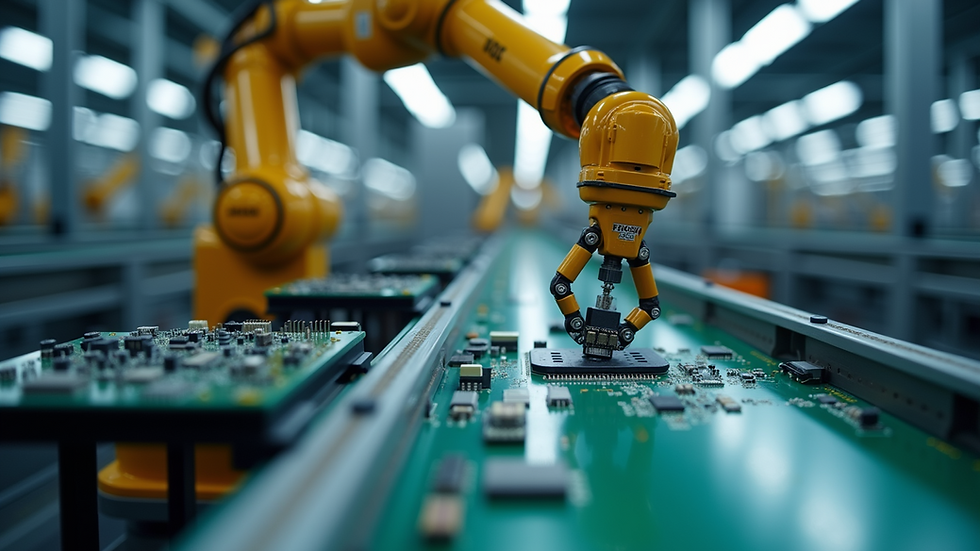
AI automates repetitive tasks, freeing employees to focus on higher-value work. For example, in manufacturing, AI-powered robots handle assembly and quality checks faster and more accurately than humans. This reduces errors and speeds up production.
In customer service, AI chatbots respond instantly to common inquiries, reducing wait times and improving satisfaction. AI systems can also analyze large data sets to identify patterns and predict demand, helping companies manage inventory better.
Key benefits include:
Faster task completion
Lower error rates
Better resource allocation
Improved forecasting accuracy
Identifying Areas for AI Integration
Before adopting AI, assess your current operations to find where AI can add the most value. Look for tasks that are:
Repetitive and rule-based
Data-heavy and require analysis
Time-consuming and prone to human error
For example, a logistics company might use AI to optimize delivery routes based on traffic and weather data. A retail business could apply AI to personalize marketing offers by analyzing customer purchase history.
Start small with pilot projects in one department or process. Measure the impact and scale up gradually.
Choosing the Right AI Tools
AI comes in many forms, including machine learning, natural language processing, and computer vision. Selecting the right tools depends on your goals and existing infrastructure.
Machine learning helps with predictions and pattern recognition, useful for demand forecasting or fraud detection.
Natural language processing powers chatbots and sentiment analysis, improving customer interactions.
Computer vision supports quality control by inspecting products visually.
Work with vendors who offer flexible solutions that integrate with your current systems. Open-source AI frameworks like TensorFlow or PyTorch can also be customized if you have in-house technical expertise.
Training Your Team for AI Success
AI integration is not just about technology; it requires people who understand and trust the new systems. Provide training to employees on how AI tools work and how to use them effectively.
Encourage collaboration between AI specialists and operational staff. This helps identify practical challenges and ensures AI supports real needs. Transparency about AI’s role reduces resistance and builds confidence.
Overcoming Common Challenges
AI adoption can face obstacles such as data quality issues, lack of skills, or unclear objectives. Address these by:
Cleaning and organizing your data before feeding it into AI models
Hiring or partnering with AI experts
Setting clear goals and metrics to track AI performance
Remember that AI is a tool to assist humans, not replace them. Combining human judgment with AI insights leads to better outcomes.
Real-World Examples of AI Transforming Operations
Amazon uses AI-driven robots in warehouses to move goods efficiently, reducing delivery times.
UPS applies AI to optimize delivery routes, saving millions of miles driven annually.
Siemens employs AI for predictive maintenance in factories, preventing costly equipment failures.
These examples show how AI can improve speed, reduce costs, and increase reliability.
Planning Your AI Integration Roadmap
To successfully transform your operations, follow these steps:
Define clear objectives for AI use
Identify processes that benefit most from AI
Choose appropriate AI technologies
Pilot AI projects and measure results
Train staff and adjust workflows
Scale AI solutions across the organization
Regularly review AI performance and update models to keep pace with changing conditions.
The Future of Operations with AI
AI will continue to evolve, offering new capabilities like advanced robotics, real-time analytics, and autonomous decision-making. Companies that embrace AI now will be better positioned to adapt and grow.
Start your AI journey with a clear plan, focus on practical applications, and invest in people as well as technology. This approach will help you transform your operations and unlock new opportunities.
Transforming your operations through AI integration is a step toward greater efficiency and competitiveness. Begin by identifying key areas for AI, choose the right tools, and prepare your team. With thoughtful planning and execution, AI can become a powerful partner in your business success.


Comments